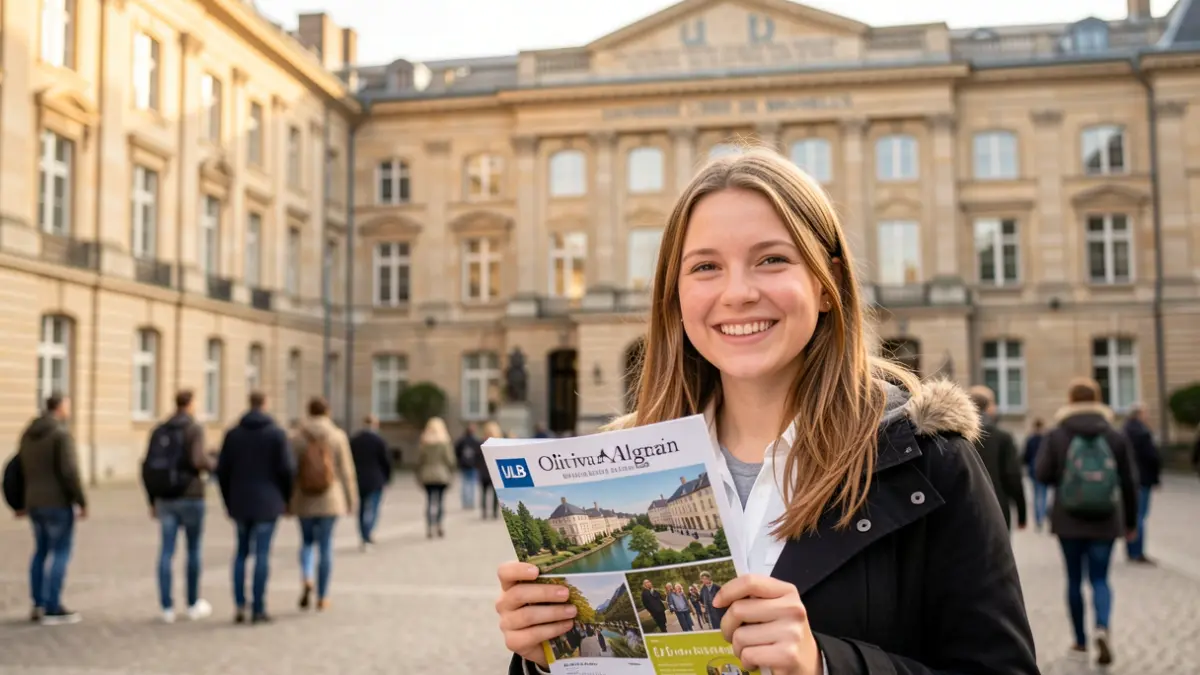
Through a travel grant provided by ARES and ULB, students can undertake international mobility experiences in one of ARES's 31 partner countries in Africa, South America, and Asia, for research or professional internships. Olivia Algrain, a student in population and development science, chose Cuba for her internship.
As part of her Master's degree, an international internship was highly recommended. Selected for an internship at the Belgian Embassy in Cuba, Olivia, of Cuban origin and fluent in both French and Spanish, saw the country as an advantageous destination due to its accessibility and her linguistic skills. She emphasizes the importance of having a personal connection to one's destination, whether through language, contacts, or local knowledge.
The primary motivation for applying for the grant was financial, as the trip would not have been possible without this funding. Olivia found the application process straightforward thanks to the information provided by ARES and ULB, but advises careful consideration of one's project and promptly obtaining a letter of recommendation from a professor.
Before leaving, she was concerned about communication, particularly the availability of Wi-Fi and mobile data, which differ from Europe. Upon arrival, she was surprised by the transformation of Cuba and rediscovered the country with fresh eyes. However, she notes that adaptation remains challenging due to the country's multidimensional crisis.
Her initial settling-in process went smoothly, although relations with the embassy later became complicated due to structural issues and a lack of communication. She advises taking time to observe, listen, and connect with the environment and people.
Professionally, Olivia realized the importance of the work environment and good communication, beyond the prestige of an internship at a major institution. Academically, she recommends stepping back before writing. Personally, the trip profoundly impacted her.
Her stay was marked by significant events, including a mosquito-borne disease outbreak, Hurricane Melissa, water and electricity shortages, and the embassy's closure due to budget reasons. She overcame difficulties with the help of friends made there and activities like yoga, suggesting learning something new outside the internship context to meet people.
She valued the sharing and intergenerational relationships she encountered. The ARES grant made the trip more serene by partially covering expenses. Olivia encourages hesitant students to apply, noting the process requires organization, motivation, and patience. She advises researching the country and contacting past grant recipients.
In one word, she summarizes the experience as: 'Intense'.