
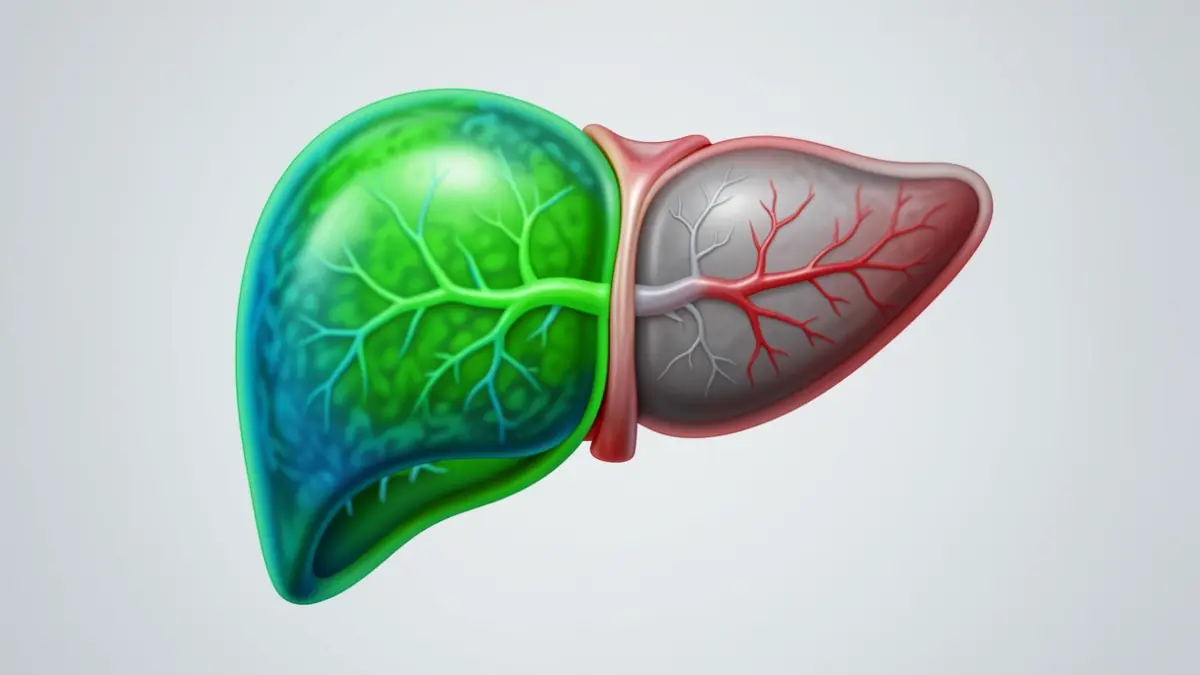
For the first time, a large-scale international prospective study, published in the Journal of Hepatology, directly compares the outcomes of patients with severe liver failure (Acute-on-Chronic Liver Failure - ACLF) based on whether they received a liver transplant.
The CHANCE cohort includes over 1,000 patients from 63 centers across Europe, North America, South America, and Asia. The study results show a dramatic difference between transplanted and non-transplanted patients. For patients rejected for transplantation, one-year mortality reached 73% in ACLF-2 cases and 88% in ACLF-3 cases. For patients with comparable severity who underwent liver transplantation, this mortality was 10.5% and 20.7%, respectively. These findings indicate that transplantation can offer a real long-term survival prospect, even for very advanced patients with multiple organ failures.
« The CHANCE data show that the severity of ACLF should not, on its own, lead to considering transplantation as futile. For a large majority of these patients, when a transplant can be performed under appropriate conditions and at the right time, it can transform an extremely grim prognosis into a genuine chance of survival », explains Prof. Thierry Gustot, Director of the Transplantation Department at H.U.B and principal investigator of the CHANCE study.
Previously, knowledge on transplantation for severe ACLF patients relied mainly on studies with limited centers. The CHANCE study offers a new perspective due to its prospective, international, and multicenter nature. However, it identifies a significant limitation: for patients with five or six organ failures, transplant outcomes remain less favorable, necessitating particularly rigorous patient selection.
The study is based on detailed patient follow-up and a unique international biobank of samples collected during their care. This infrastructure, established across the 63 participating centers worldwide, will enable a better understanding of ACLF mechanisms, identification of factors associated with transplant response, and ultimately, improved patient selection and management.
« CHANCE is more than just a clinical study. We have built an international cohort and biobank that will allow us to explore new questions in the coming years: why do some patients recover after transplantation while others fare poorly? What markers could help us better select candidates? And how can we intervene earlier? », emphasizes Prof. Gustot.
The Clinic of Medical Hepatology and Liver Transplantation at the Hôpital Universitaire de Bruxelles (H.U.B) manages all patients with acute or chronic liver conditions, diagnoses liver diseases and their severity, and handles patients eligible for liver transplantation and their post-transplant follow-up. The H.U.B is a reference center for liver disease management in Belgium.