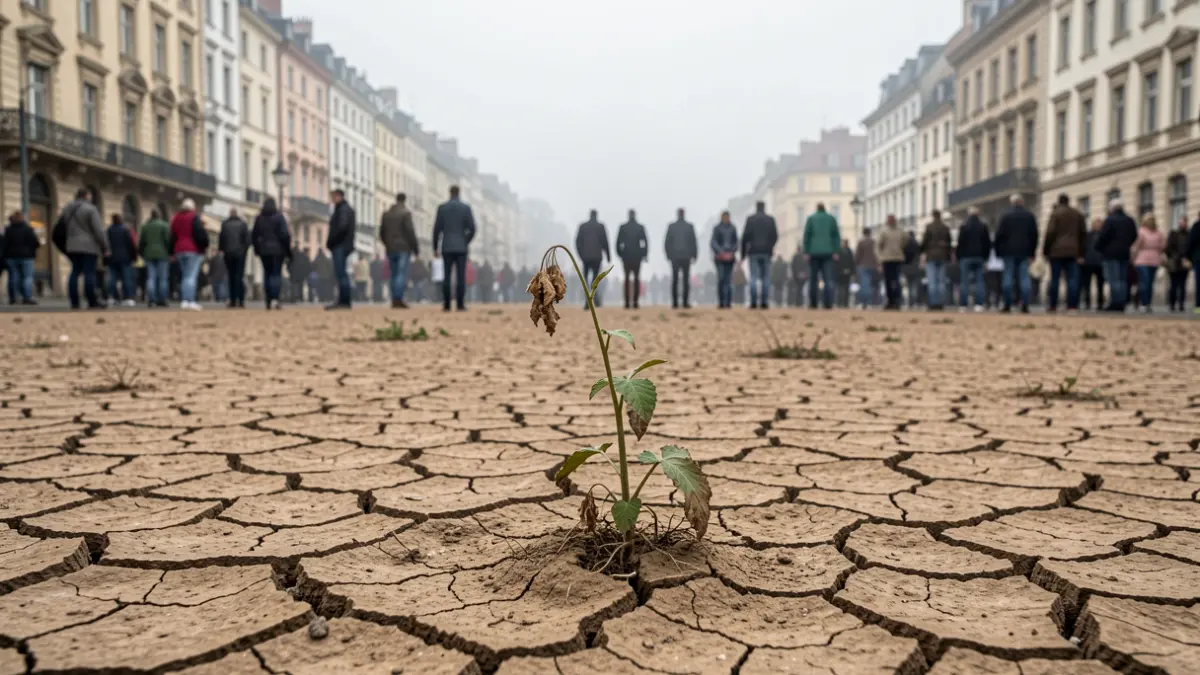
The drought situation in the Brussels-Capital Region is currently classified as yellow code, according to the regional 'drought' Cell and the meeting held on September 23, 2026. Indicators do not show a sustained return to normal, and IRM forecasts predict a dry trend for the early autumn days.
IRM indices describe the region's drought status as 'extremely dry', a condition affecting much of the country. No significant rainfall is expected in the next 10 days.
Flows in major non-navigable watercourses remain stable, albeit at low levels. The risk of cyanobacteria development in ponds is diminishing with milder weather, though monitoring continues to prevent fish mortality and aquatic ecosystem degradation. Specific concerns remain at the Leybeek pond in Watermael-Boitsfort and the phase 1 pond of Roi Baudouin Park in Jette. Groundwater levels are below average. Water levels in the Canal are normal, allowing unrestricted navigation.
The drinking water supply indicator has moved to yellow code. The flow of the Meuse river remains a key concern, having not recovered in the past 15 days, leading to ongoing water abstraction restrictions. VIVAQUA is closely monitoring the situation to ensure potable water supply.
The risk of forest fires is assessed as 'normal' (green code), according to the Agentschap Natuur & Bos. However, vigilance regarding proper forest conduct is still advised.
Public actors are implementing measures, and it is crucial for every Brussels resident to help conserve water resources by avoiding waste. Bruxelles Environnement recommends limiting or postponing non-essential water use, such as washing vehicles or cleaning outdoor surfaces. Making fires and discarding cigarette butts on the ground are prohibited. This period highlights the need to adapt our behaviors in response to climate change.
A further update on the situation will be provided at the end of next week.