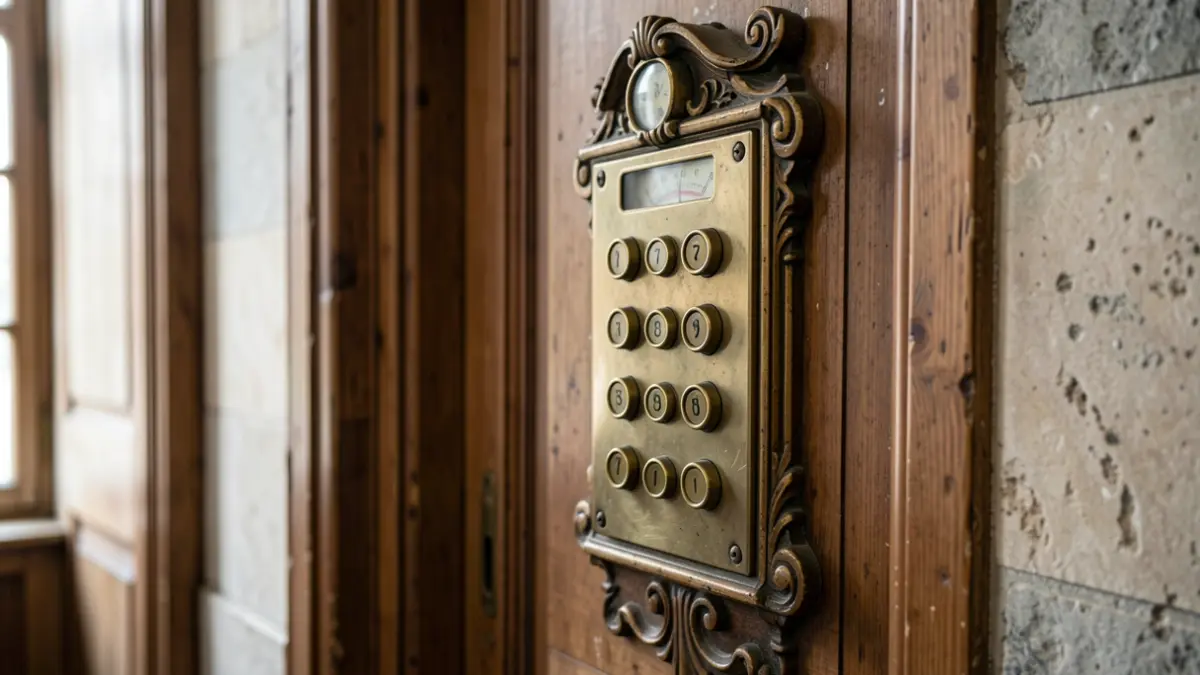
Many buildings house old elevators that represent remarkable heritage but also require securing. In Brussels, 437 elevators have already been certified for their historic value. These benefit from an extended deadline for compliance until the end of 2027. They must also have a modernization plan (including an agreement for the execution of works) from an elevator company by the end of 2025.
If your elevator is not yet certified for historic value, it is advisable to apply promptly. Homegrade can then offer free advice for implementing modernization works.
A historic elevator is an installation put into service before 1958 and certified for its historic value by Urban.brussels. In the Brussels Region, over 2,000 elevators were put into service before this date. Elevator safety is regulated in Belgium by the Royal Decree of March 9, 2003, with amendments allowing for better consideration of the heritage value of historic elevators while ensuring user and maintenance safety.
“"We wish to remind Brussels residents that Homegrade offers free services to assist them with their modernization projects. Solutions exist to preserve the heritage value of their elevator while meeting safety and modernization requirements."
The historic value certification does not exempt from modernization works but aims to help (co)owners best preserve their elevator, notably through deadline extensions and relaxed security measures. In March 2024, relaxations on implementing certain safety standards were formalized for certified historic elevators, allowing for a reduced visual impact of security solutions. For instance, the minimum required height for guardrails in open shafts has been lowered.
Modernizing an old elevator requires a risk analysis by an External Service for Technical Control (SECT). It is crucial to check the date of this analysis, as outdated recommendations could lead to more extensive and costly work than necessary.
“"The modernization of our old elevator stems from two main reasons. Alongside the safety aspects that should not be neglected, we wish to preserve this nearly 100-year-old heritage. Our elevator dates from 1937. The care taken in its integration into the building and the originality of the shaft closure and landing doors give it a certain historical, technical, and aesthetic interest that we are proud of."
Homegrade recommends obtaining a complete quote for all works from the outset, even if phased modernization is considered. The organization, commissioned by Urban.brussels, assists (co)owners by reminding them of legal obligations, analyzing quotes, and assessing the feasibility of works.
For further information, Homegrade offers an information sheet on historic elevators and modernization works, as well as a Directory of Architectural Heritage Trades to find an elevator company.