
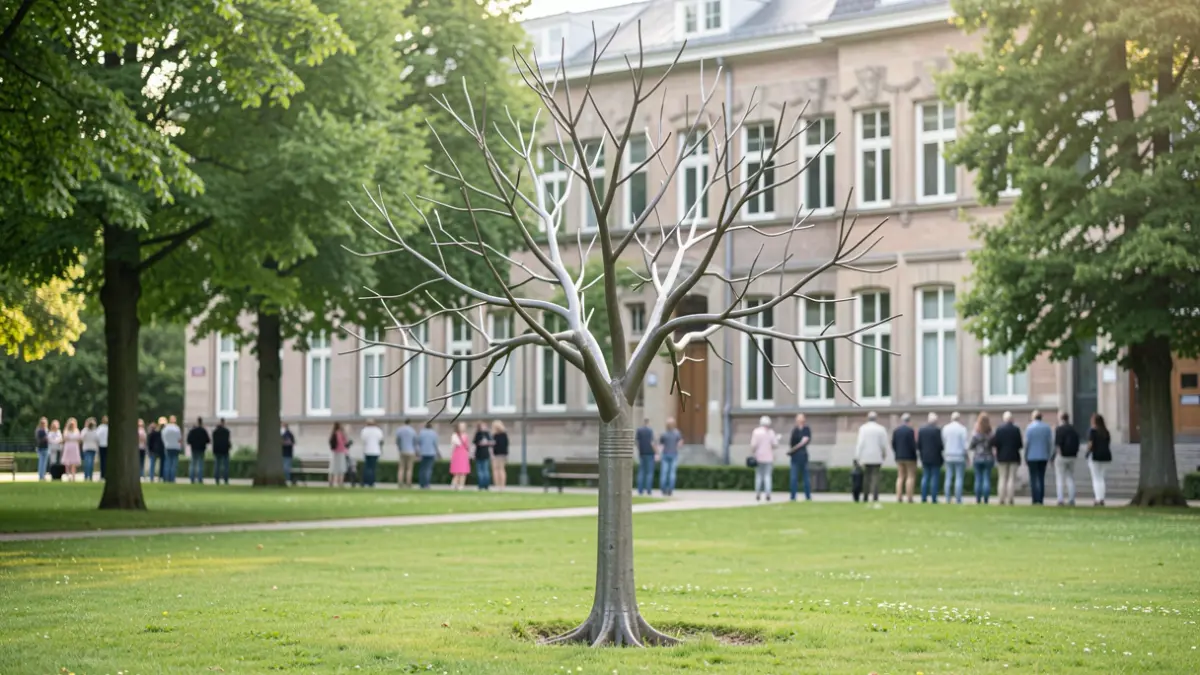
On the occasion of the World Perinatal Loss Day, Hôpital Erasme will open the doors of its Tree of Families on October 15th. This initiative, spearheaded by Dr. Caroline De Coninck, a gynecologist, aims to offer a supportive space for families navigating the difficult journey of perinatal loss.
Perinatal grief, often hard to name, affects parents when a pregnancy ends, regardless of the stage. Within the hospital's Clinic of Fetal Medicine, caregivers regularly support couples facing these situations. The recurring question, 'Are we the only ones going through this?', inspired the creation of the Tree of Families.
This place of remembrance, open to all bereaved families whether they are patients at the H.U.B or not, was conceived to allow them to give meaning to their experience and feel less alone in their often taboo and rarely discussed pain.
Dr. De Coninck highlights that the subject remains taboo, leading to family isolation. The team wished to break this solitude by creating a powerful symbol. The idea of a tree, with its symbolism of roots and branches reaching towards the sky, emerged as a universal place of remembrance, independent of any religion.
After nearly two years of development and collective reflection involving various healthcare professionals, the project culminated in a metal sculpture installed in a calm, green area near the hospital, managed in partnership with the Green Spaces of the Brussels Region.
Ribbons will allow families to leave a trace on the tree, whose evolution will symbolize the journey of grief. The project emphasizes that there is no such thing as 'minor grief', regardless of the pregnancy's duration or the circumstances of the loss.
The Tree of Families is intended as an accessible space for everyone, without appointment, where individuals can simply leave a ribbon, sit for a moment, and think of their baby, offering an alternative to more direct forms of support that may be difficult for some.
The support from medical teams, including gynecologists, midwives, psychologists, and social workers, is crucial and extends beyond the hospital stay, notably through collaborations with specialized associations.