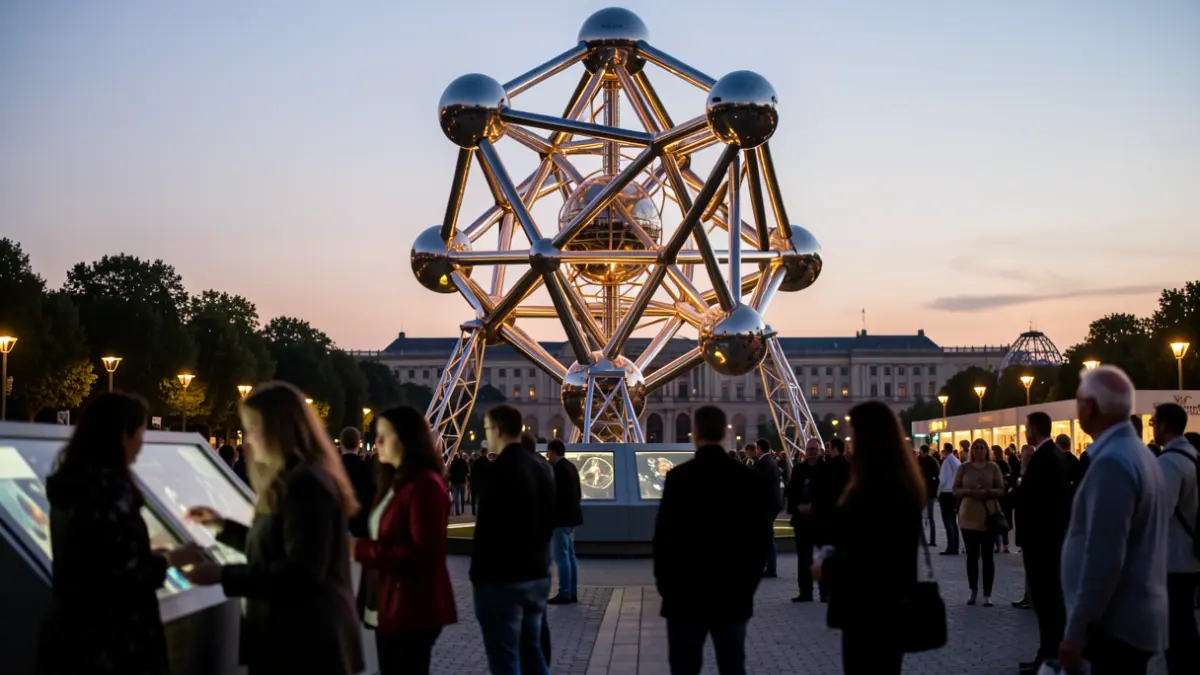
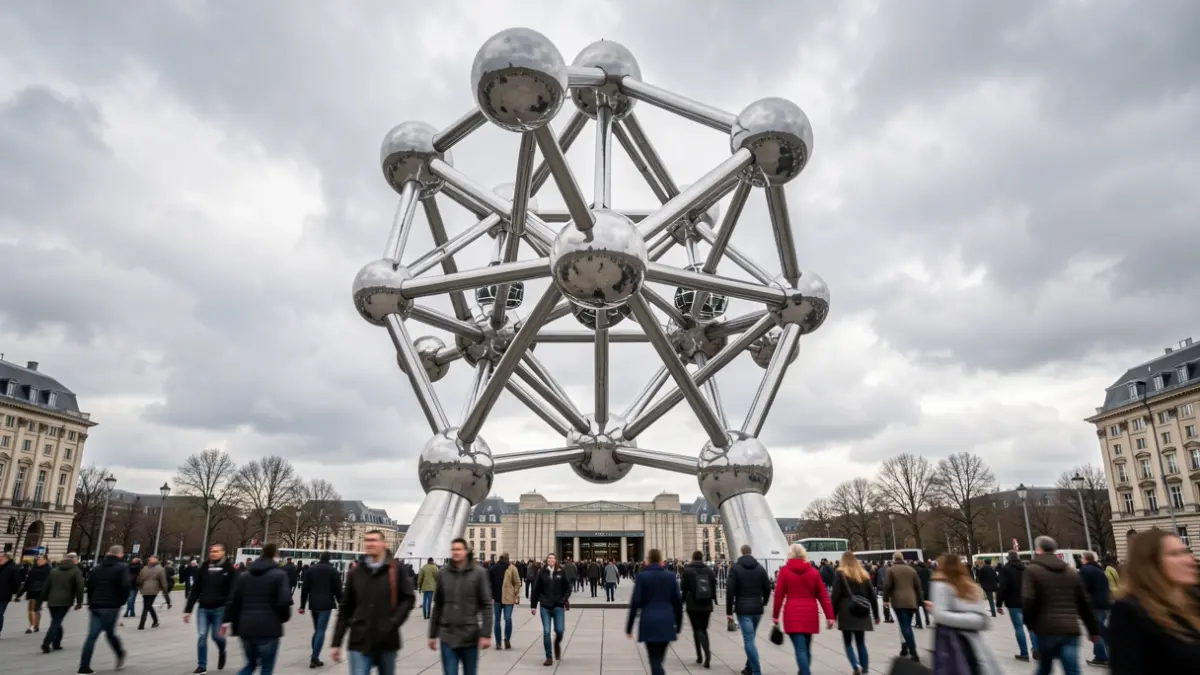
From Friday, September 25, to Saturday, September 26, the Atomium will be the venue for WiseNight 2026, a free and interactive science event. Organized by the Vrije Universiteit Brussel (VUB) in collaboration with ULB, BeWiSe, GoodPlanet, and the von Karman Institute, and funded by the European Union, the event aims to make science accessible to a broad audience.
For two days, visitors can experience science firsthand through experiments, workshops, and demonstrations, and meet researchers. Topics covered range from climate and artificial intelligence to space, mathematics, technology, and everyday applications, showcasing the breadth of science and the diverse talents required for new knowledge development.
The VUB emphasizes the importance of interaction between science and society as part of its mission. WiseNight aims to connect researchers directly with young people, families, teachers, and the general public, making scientific knowledge accessible and inspiring future scientists.
A special focus is placed on female researchers, diversity, and talent development in STEM fields. The event seeks to broaden the perception of who a scientist is by featuring researchers who share their research findings, driving questions, discoveries, doubts, and career paths, serving as role models.
Symbolically, the Ilya Prigogine sphere at the Atomium will be temporarily renamed the Marie Skłodowska-Curie sphere, honoring a renowned female scientist and highlighting the visibility of women in science and technology. This also marks the 30th anniversary of the Marie Skłodowska-Curie Actions (MSCA) program, part of the EU's Horizon Europe initiative.
Several VUB researchers will participate, including: Lesley De Cruz (climate, AI), Hannelore Van Bavel (social anthropology, gender), Yuxin Pu (urban geography, sustainability), Kateryna Osadcha (AI and education), Nanoek Bos (media and communication studies), Katrien Dierickx (bioarchaeology), and Mishka Beutels (palliative and chronic care).
On Friday, September 25, approximately 400 Brussels students from Dutch- and French-speaking schools will attend workshops, demonstrations, and presentations, engaging directly with female researchers. This is a key aspect of science communication for the VUB, demonstrating that research stems from curiosity and aims to solve societal challenges.