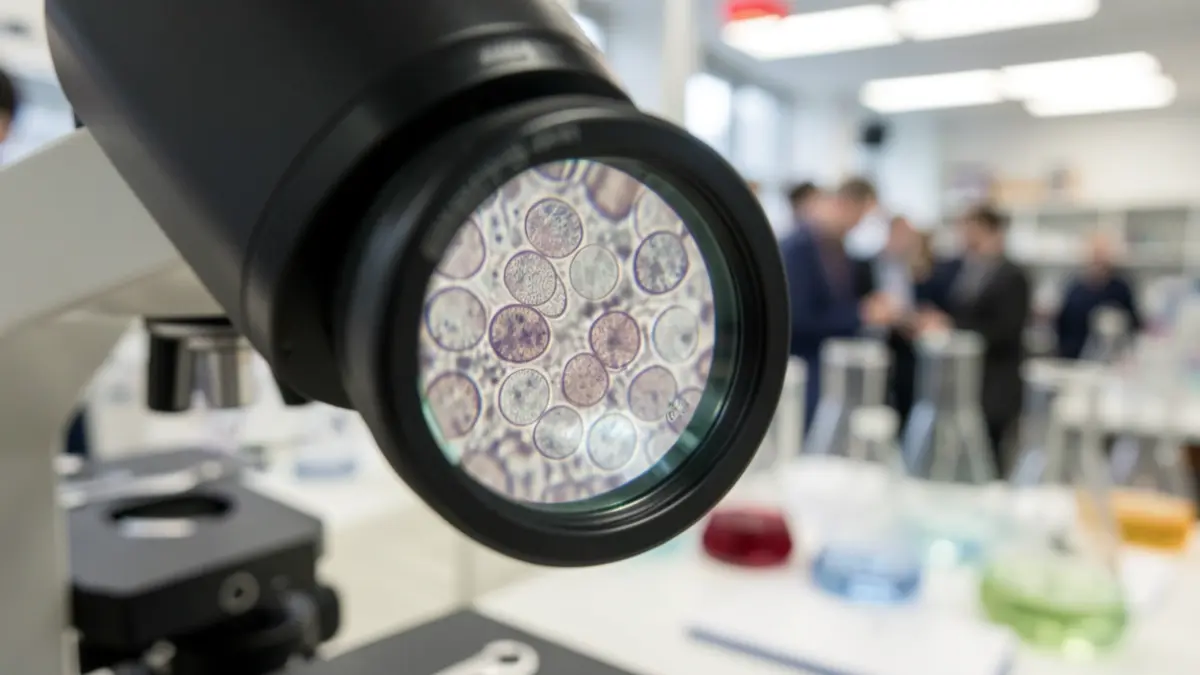
The VUB will be involved in nearly thirty activities, over half of the program for the Brussels Science Festival, the city's edition of the Day of Science. Visitors can test prosthetics and exoskeletons developed at VUB, build a climate-resilient city in LEGO, or discover how ChatGPT 'reasons'. The festival marks the festive conclusion of FTI (Flanders Technology & Innovation) and is free for everyone, with an extra focus on accessibility this year.
From October 16 to November 15, 2026, FTI immersed eight Flemish cities in the world of technology, innovation, and creativity. On the final day, the Day of Science, Flanders' annual science highlight, takes over. In Brussels, this traditionally happens at Muntpunt, where nearly 100 researchers from various Brussels institutions translate their work into an experience for the general public. The VUB contributes the largest share, with activities on all six floors of the building and beyond.
“We conduct high-level research in our country,” says Eline Livémont, Head of Research Outreach & Communication at VUB. “It remains crucial to bring science and research as close as possible to people, right in the city and free for everyone.”
Visitors can operate robotic prosthetics and exoskeletons developed by engineers from the VUB's Mechanical Engineering department. In the Shampoo Challenge by the In Vitro Toxicology and Dermato-Cosmetology (IVTD) lab, children will test shampoo safety on a 3D skin model, without animal testing. The KAN KERen game from the Oncology Research Center (ORC) will introduce them to cancer research playfully, and at the PijnWijzer lab, an initiative of the VUB Painless Lifestyle network, they will measure their pain threshold.
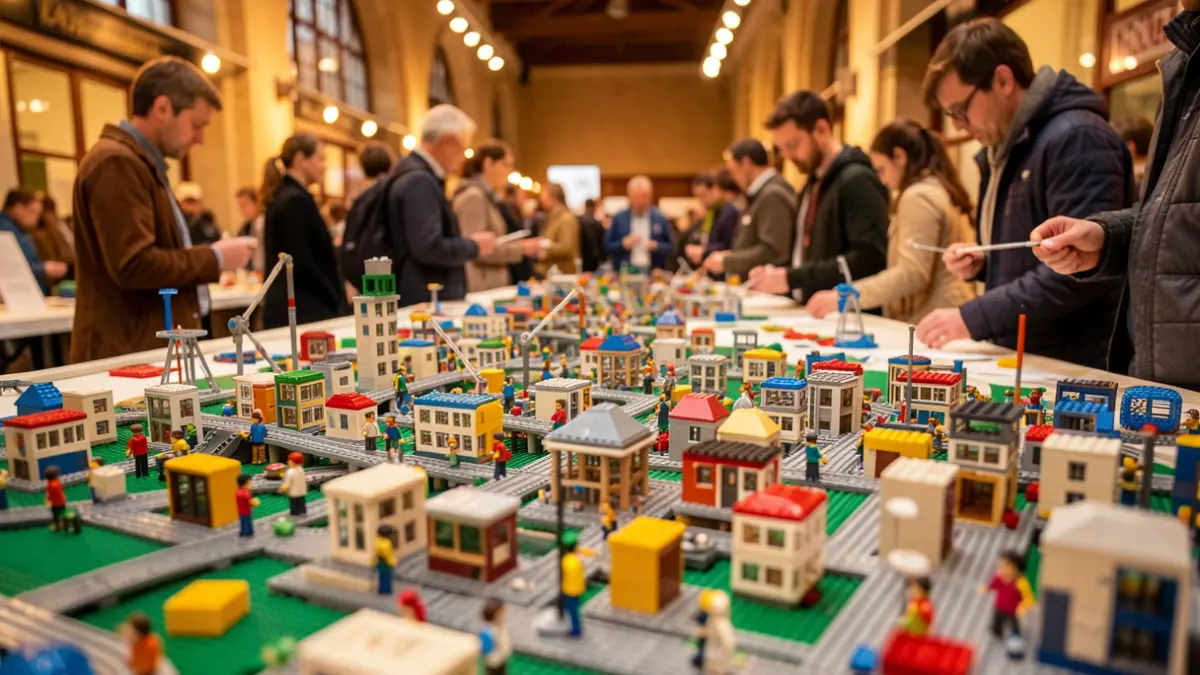
In the LEGO Urban Climate Game, developed by VUB and the KMI, visitors will build a city and immediately measure the heat island effect. A wave tank will show how an offshore wind turbine withstands a storm, and VUB researchers will explain how the underground helps combat climate change through CO₂ storage and geothermal energy. The student division of the Brussels Photonics (B-PHOT) research group will showcase the seven wonders of light.
Furthermore, visitors will explore real (micro)meteorites and mammoth teeth with the AMGC research group, step into the Einstein Telescope with FWO and KU Leuven, and test how easily their brain switches between languages in the Bilingual Brain Challenge. Using a VR laser game, they will build a protein from DNA code.
In lectures, the Data Analytics Lab will explain how ChatGPT 'thinks', and the Interuniversity Institute for High Energies (IIHE, ULB-VUB) will explain how neutrinos are caught. Historians will discuss what 4,000 years of jokes say about the past, and researchers from BRISPO (Brussels Institute for Social and Population Studies) will use the Moment app to show why women feel safer on site than surveys suggest. The Marine Biology Lab will offer a lecture and photo exhibition on plankton and a children's lecture on giant shells. Outside Muntpunt, historians from the VUB History program will lead a walk through Brussels' untold past, and a second walk will head to the Sonian Forest.
On the fifth floor, VUB researchers involved in the VUB Children's University in 2027, including researchers from Pain in Motion, will test their workshops. A new adventure starts every fifteen minutes, without registration. Through the children's trail, the youngest visitors can also collect stickers for a diploma and a surprise.
“A science festival can be an overwhelming and challenging place to visit,” says Kim Barbé, communication advisor at FWO. “We have been providing sensory guides and a quiet room for several years, but this year, thanks to support from Innoviris, we were able to achieve even more.” A detailed step-by-step plan prepares children who need predictability for their visit, from arrival to departure. Those sensitive to stimuli are best advised to come early in the day. Deaf and hard-of-hearing visitors can, after registration, follow a guided tour with a Flemish Sign Language interpreter.
The Brussels Science Festival is a collaboration between Vrije Universiteit Brussel, Erasmushogeschool Brussel, Odisee Hogeschool, KU Leuven, LUCA School of Arts, Muntpunt, FWO, and SciMingo. The festival is part of the Day of Science, an initiative of the Flemish government. Everyone is welcome free of charge at Muntpunt between 10 AM and 5 PM. The full program is available at wetenschapsfestivalbrussel.be.