The West Nile Virus (WNV) is currently present in Belgium. During September, the first human cases were reported in the Brussels Region, notably in the municipalities of City of Brussels and Etterbeek. Furthermore, about thirty infected birds were also detected in this region, indicating active circulation of the virus.
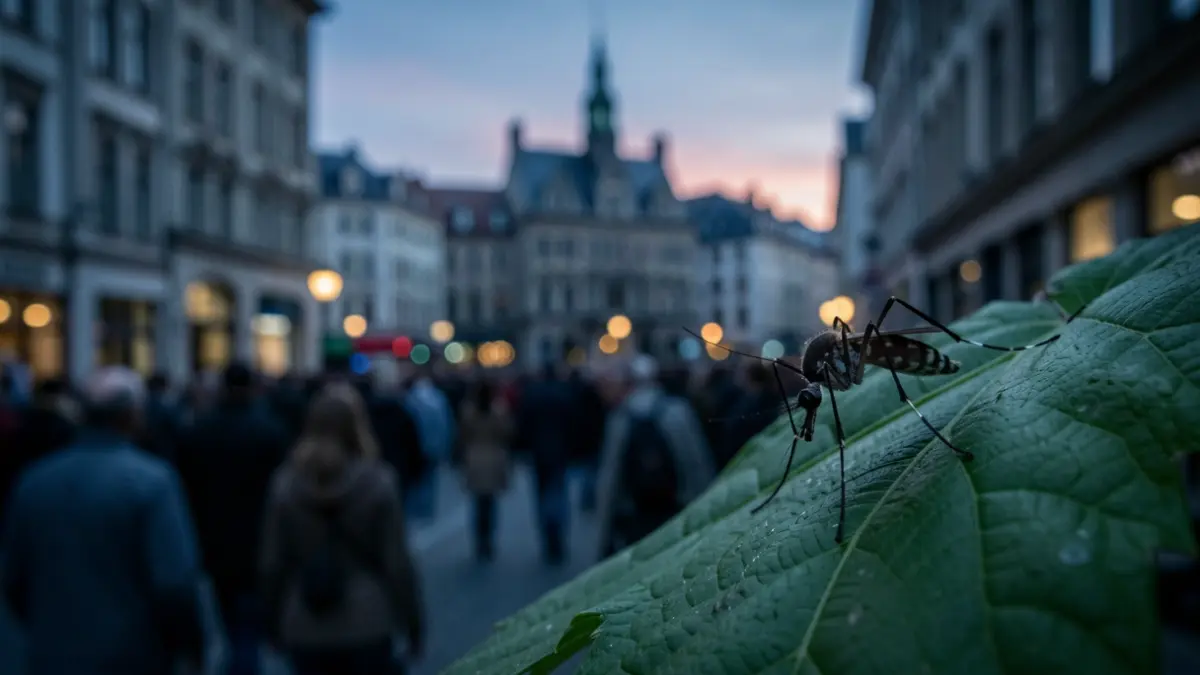
WNV is an arbovirus transmitted solely by mosquito bites, with no human-to-human transmission. The majority of infected individuals show no symptoms or develop a mild form of the illness (fever, headache, fatigue). However, the elderly, immunocompromised individuals, or those with certain chronic conditions are at increased risk of developing a severe neurological form, such as meningitis or encephalitis.
Therefore, increased vigilance regarding anti-mosquito prevention measures is recommended, particularly for high-risk individuals. The mosquito vector is primarily active after sunset and during the night. Here are the recommendations applicable until the end of the mosquito activity season, in October:
- Keep windows and doors closed or equipped with mosquito nets at dusk and during the night.
- Use mosquito nets on windows and, if necessary, around beds.
- Encourage wearing covering clothing (long sleeves, trousers) during outdoor activities, in the evening and at night.
- Apply a skin repellent to exposed areas, following the manufacturer's recommendations.
- Eliminate all sources of stagnant water in outdoor spaces (saucers, watering cans, clogged gutters, unmaintained water features).
- Regularly empty and clean outdoor containers that can hold water.
For more information on the West Nile Virus and prevention measures, please consult Vivalis's dedicated webpage.